
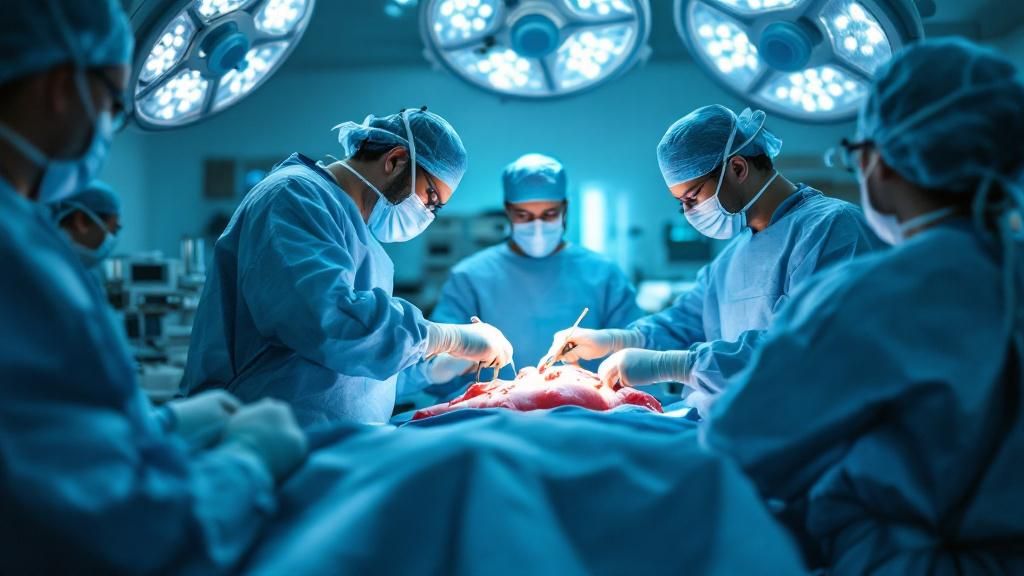
Britain’s transplant system, once regarded as world-leading, has fallen dramatically behind other leading European countries, leaving hundreds of patients in limbo and prompting urgent calls for reform. The NHS presently carries out half as many lung transplants per head as many countries across Europe, despite receiving comparable numbers of donated organs. Amongst those on the waiting list is Jodie Cantle, a 34-year-old suffering from cystic fibrosis who has been offered new lungs on 17 separate occasions over seven years, only to have each procedure postponed. A BBC investigation has revealed widespread failures such as outdated technology, persistent underfunding and the exodus of senior surgeons, while the government has now demanded the NHS “urgently implement” recommendations to reform the service.
A Structure in Deterioration
The difference between Britain’s transplantation successes and its existing status could hardly be more pronounced. Once a beacon of excellence, the NHS transplantation programme has plateaued whilst rival nations have progressed. The quantity of heart and lung procedures carried out each year has shown little variation for three decades, a damning statistic that reveals fundamental institutional difficulties. What makes this particularly troubling is that the gap cannot be ascribed to a insufficient organ supply—the UK’s donation rates are in line with, or in some cases better than, European counterparts. Instead, the problem lies in the efficiency with which those valuable donor organs are being deployed once they get to healthcare settings.
The root causes of this decline are multifaceted and deeply entrenched. Outdated equipment sits alongside chronic underinvestment in facilities and training, whilst senior surgeons increasingly choose to leave the profession or emigrate abroad. The technology gap is particularly acute: whilst overseas hospitals routinely employ advanced devices to assess and preserve organs, many NHS centres lack access to these same tools. This disparity has created a vicious cycle where fewer organs are deemed suitable for transplantation, leading to longer waiting times for patients and further demoralisation among clinical staff who feel hamstrung by inadequate resources.
- Only a tenth of lungs and a seventh of hearts are transplanted
- Some European countries make use of twice as many organ donations
- Twelve surgeons report lengthy periods of slow progress on requests for equipment
- Senior transplant specialists are leaving the National Health Service
Technology and Resources Lagging Behind
The technological divide between the NHS and its European equivalents has become increasingly untenable. Whilst hospitals across France, Germany and the Netherlands have invested in cutting-edge evaluation and preservation equipment, many British transplant centres continue to operate with obsolete machinery that restricts their ability to evaluate organ viability. This shortage of equipment results in fewer successful transplants. Organs with salvage potential with modern technology are discarded as unsuitable, denying patients of life-saving treatment options. The disparity is far more than a minor issue—it represents a core strategic weakness that damages patient outcomes.
Senior clinicians have become more outspoken about the resource crisis impacting their work. For years, transplant surgeons and specialists have called for modern equipment, only to face bureaucratic delays and budget constraints that leave their pleas unheeded. This prolonged struggle has taken a toll morale within the profession, prompting experienced consultants to seek opportunities abroad where they can exercise their expertise with adequate resources. The exodus of talent represents an immeasurable loss to the NHS, depriving the system of expertise at the exact moment it is required urgently to reverse the decline.
Aging Systems Limiting Success
The shortage of up-to-date organ assessment tools represents one of the greatest obstacles to enhancing organ transplant outcomes. Devices that have become standard in top-tier European healthcare facilities—such as warm perfusion technology and sophisticated imaging technology—continue to be unavailable in a large number of NHS facilities. These tools permit medical professionals to more accurately assess whether organ donations are appropriate for transplanting, potentially rescuing organs that would otherwise be discarded. Without such systems, the NHS is obliged to use older assessment methods that are less dependable and more conservative in their judgement.
Investment in organ preservation systems has likewise fallen behind. Hypothermic and normothermic perfusion machines, which maintain organ viability during transport and allow for prolonged evaluation timeframes, are commonplace in European hospital settings but remain a luxury in many British facilities. This equipment shortfall has created a vicious cycle: a reduced number of organs are considered viable for transplantation, transplant numbers stagnate, and the case for additional funding grows more difficult to defend to budget-holders who see declining activity rates.
- Warm perfusion technologies used routinely in continental medical centres are not accessible in numerous NHS facilities
- Sophisticated diagnostic imaging for tissue evaluation is routine procedure abroad but unavailable in the UK
- Hypothermic preservation machines are widely available in European centres but scarce in the United Kingdom
- Traditional evaluation approaches are more conservative and decline tissues that contemporary equipment could salvage
- Procurement applications have encountered prolonged waiting periods and budget constraints within health service purchasing systems
The Human Impact of Delays
For individuals like Jodie Cantle, the transplant crisis is not an abstract policy failure—it is a daily reality that dictates every aspect of their existence. The 34-year-old, who has CF, must keep her mobile phone within arm’s reach at all times, ready to abandon whatever she is doing should a suitable organ become available. Yet in seven years, despite being presented with new lungs on 17 separate occasions, each operation has been called off. The emotional burden of constant letdowns, combined with the physical limitations imposed by her condition, creates a strange state of limbo where life feels constantly on hold.
Jodie is among 450 grown-up individuals currently waiting for a heart or lung transplant throughout the UK. With only 9% lung capacity left, a transplant represents her sole practical route to a normal life. However, the inefficient processes mean that when organs do become available, they are frequently deemed unsuitable for use—a decision that leaves patients in a condition of ongoing worry. The psychological toll of these repeated cancellations, combined with the uncertainty about when, or if, a appropriate donor organ will arrive, exerts a profound impact on patients’ mental health and wellbeing.
Life at a Standstill
The impact of prolonged waiting stretches far beyond the bodily sphere. Patients must structure their entire lives around the prospect of an emergency notification, unable to manage to make firm commitments or commitments. Jodie describes experiencing the sensation that “the world is moving on without me” whilst she stays bound to her oxygen cylinder. This forced stillness affects social bonds, job opportunities, and self-advancement. For younger individuals in particular, the transplant wait constitutes a considerable stretch of their developmental period occupied in a condition of limbo, seeing peers advance whilst they continue bound by their health conditions.
Issues Following Surgery
Beyond the distress of waiting, patients who do eventually obtain transplants encounter continuous challenges with post-operative care. The NHS’s resource constraints extend beyond the transplant operation itself, affecting the standard of follow-up support and immunosuppressive therapy management that are essential to long-term graft viability. Insufficient aftercare heightens the risk of organ rejection and infection, potentially undermining the very organs patients have spent years waiting to receive. This systemic weakness weakens the therapeutic benefits achieved through transplantation, rendering patients vulnerable to adverse effects that could have been avoided with better-equipped support services.
Regional Inequalities and Talent Migration
The crisis affecting Britain’s transplant services is inconsistently distributed across the country. Considerable variations exist between transplant centres, with patients in certain regions encountering markedly prolonged delays than their counterparts elsewhere. These geographical inequalities reflect wider funding distribution issues within the NHS, where some centres contend with outdated equipment, inadequate staff levels, and restricted operating theatre access. The inconsistencies in delay lengths has raised questions about equity of access to life-saving procedures, with patients’ postcode essentially establishing not only how long they wait but also their prospects for getting a suitable organ. Such variations undermine the principle of a national health service and leave some of the most at-risk individuals enduring excessive difficulty.
Contributing substantially to these disparities is the exodus of seasoned transplant specialists and experts from the United Kingdom. Senior clinicians, disheartened with persistent financial constraints and outdated facilities, have increasingly sought opportunities abroad where they can utilise modern technology and work within better-resourced systems. This loss of talent reduces the expertise available within UK transplant units, compelling remaining staff to work under even greater pressure. The loss of skilled practitioners not only reduces the immediate capacity to perform transplants but also erodes the supervisory support to junior doctors specialising in this specialised field. Without intervention, this pattern threatens to create a downward spiral of declining expertise and deteriorating service quality.
| Transplant Centre | Average Wait Time for Heart Transplant |
|---|---|
| Harefield Hospital, London | 894 days |
| Papworth Hospital, Cambridge | 756 days |
| Freeman Hospital, Newcastle | 612 days |
| Wythenshawe Hospital, Manchester | 743 days |
| Royal Brompton & Harefield, London | 867 days |
| Great Ormond Street Hospital, London | 521 days |
| Bristol Heart Institute, Bristol | 698 days |
Loss of Skills Abroad
The exodus of British transplant specialists signals a considerable blow to the NHS and reflects the deteriorating conditions within the service. Surgeons developed through substantial taxpayer investment are steadily transferring their skills to better-funded healthcare systems in Europe, North America, and beyond. These departures are rarely sudden; instead, they come after extended periods of discontent with funding constraints, lack of modern equipment, and the inability to access technologies commonly found in comparable nations. The loss of such experienced professionals leaves a shortfall that is difficult to remedy, as developing fresh talent demands prolonged specialist training and guided clinical experience. For those on transplant waiting lists, the departure of skilled surgeons directly impacts their likelihood of obtaining rapid, superior medical attention.
International talent acquisition efforts by other nations have actively targeted British transplant teams, offering modern facilities, better remuneration, and the opportunity to work with innovative medical technology. Some surgeons have characterised the decision to leave as one motivated by professional conscience—a desire to provide patients with the optimal results using existing capabilities. Their testimonies illustrate a situation of a service finding it difficult to rival with more generously funded rivals. The combined impact of these departures threatens the very backbone of Britain’s transplant programme, creating the risk of a continued deterioration in service capability and outcomes. Without immediate funding and systemic reform, the exodus of expertise seems probable to intensify.
What Needs to Change
Experts and clinicians working within the transplant service have identified several critical areas requiring immediate attention and investment. The primary challenge centres on updating equipment and technological systems, with surgeons emphasising that many of the tools currently in use in other Western nations are not available in NHS hospitals. Investment in devices for organ preservation, enhanced surgical instruments, and diagnostic systems could significantly boost the proportion of donated organs suitable for transplantation. Additionally, staffing levels need reinforcement to ensure adequate surgical staff, anaesthetists, and support staff are available to manage the greater volume of work that improved technology would facilitate.
Beyond equipment and staffing, the transplant service necessitates a thorough examination of its working arrangements and financial distribution. Healthcare professionals stress that enduring advancement demands ongoing investment rather than temporary measures, with committed support for training new specialists and keeping experienced surgeons. The government’s dedication to executing 2024 recommendations represents a beginning, but those practising in the sector argue that recommendations alone are lacking without aligned budget support. A coordinated strategy addressing recruitment, retention, training, and infrastructure modernisation is essential to restore Britain’s status as a world leader in transplantation.
- Support the adoption of advanced preservation systems commonly employed throughout European nations
- Boost workforce numbers and improve remuneration to maintain seasoned surgical professionals
- Establish ringfenced resources for transplant service modernisation and expansion
- Develop extensive training initiatives to cultivate future cohorts of surgical experts
