
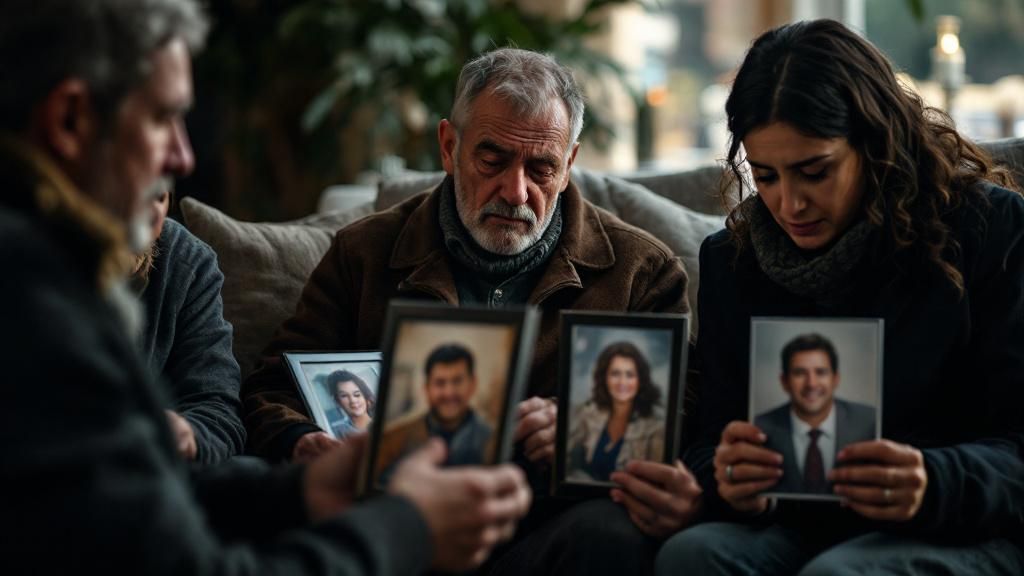
Grieving families have shared their final testimonies this week at the landmark Covid inquiry in west London, with moving testimonies from family members who had family members die during the health crisis. Among them was Rivka Gottlieb, whose father Michael passed away alone in hospital in April 2020 at age 73, which left her still haunted by his lonely death. The Covid inquiry concluded its public sessions after hearing more than eight hours of testimony from bereaved family members in its last week. Since June 2023, the inquiry has taken oral evidence from 381 witnesses across London, Edinburgh, Cardiff, and Belfast, and reviewed 600,000 documents. The proceedings have examined the pandemic’s severe effects on society, including how families were separated by social distancing restrictions that kept them away from family members who were dying.
The Closing Voices: Narratives of Grief and Isolation
Rivka Gottlieb’s story illustrated the deep isolation people experienced during the pandemic’s most fatal period. Her father Michael, a fit and active 73-year-old who worked part-time in a golf shop and taught children at his neighborhood synagogue, was admitted to Royal Free hospital in north London in March 2020 with his wife Mili. The family initially expected a brief hospitalization with oxygen support, but Michael’s condition deteriorated quickly. His cough grew so intense he could only communicate via WhatsApp to tell his daughter he was being placed on a ventilator. Within two weeks, doctors told the family there was little chance of recovery and began withdrawing his life support, leaving Rivka to recall the experience as “a grim and frightening time” marked by challenging conversations with hospital staff and constant fear.
The emotional burden extended far beyond Michael’s death. His wife Mili was released following a week but has since faced severe long-term effects including persistent breathlessness, confusion, and stomach pain, rarely leaving their home. Over the last two days of hearings, twelve carefully selected relatives testified about their experiences, with 42 bereaved family members having given evidence throughout the inquiry since June 2023. Their combined testimonies showed that social distancing rules systematically prevented families from attending during their loved ones’ final moments, inflicting trauma that continue to haunt survivors years after the pandemic’s declaration of emergency ended.
- Michael Gottlieb died alone in April 2020 at 73 years old
- His wife Mili experienced prolonged medical complications from Covid infection
- Families were prevented from visiting dying loved ones due to lockdown restrictions
- Isolation during death remains a source of ongoing emotional trauma for survivors
Rules That Separated Families and Delayed Closure
The Covid inquiry’s final testimonies uncovered how government restrictions fundamentally altered the experience of death and bereavement across Britain. Families recount being “torn apart” by separation mandates that prevented them from touching their family members during final moments, maintaining watch at hospital beds, or offering final farewells directly. These restrictions, put in place to control virus transmission, created a compounded distress that deepens the grief of losing family members. Many next of kin stated that the inability to attend during the moment of death has left them with lingering emotions and a perception of finality missing that persists in the years since, troubling their life each day.
The psychological consequences of enforced separation during terminal illness has emerged as a critical theme throughout the inquiry’s proceedings. Hospital staff often served as surrogate family members, relaying communications and holding phones so dying patients could see loved ones on screens rather than in flesh. Survivors describe the harshness of this situation—watching a parent or spouse decline through a video call, prevented from providing physical comfort or receive final embraces. These restrictions, while endorsed by public health authorities at the time, have left bereaved families wondering if the cost to individual dignity and familial bonds was sufficiently weighed in pandemic decision-making.
Funeral Limitations and Ritual Interference
Beyond the hospital wards, restrictions applied to funeral services and memorial gatherings, preventing families from conducting traditional ceremonies that mark death and facilitate communal grieving. Capacity limits meant only a limited group of relatives could attend funerals, creating difficult decisions about who would be present to pay respects to the dead. Religious and cultural rituals—central to how many communities process loss—were cancelled or severely curtailed. For families observing Jewish, Muslim, Christian, Hindu, and other faith traditions, these disruptions breached holy customs developed over centuries to assist the mourning and remember those departed.
The inquiry heard testimony about families separated across continents, unable to travel for funerals due to border closures and quarantine requirements. Some relatives could not attend services for parents, siblings, or children they had lost to Covid. These enforced absences created a peculiar form of grief without closure, where families never had the opportunity to gather, share memories, or collectively mourn. Years after the pandemic’s official end, many survivors report that the absence of proper funeral rites|deprivation of traditional funeral ceremonies has prevented them from fully processing their loss or moving forward emotionally.
- Restrictions on funeral attendance forced families to choose who could attend services
- Religious rituals and ceremonies were cancelled or severely restricted across the country
- Border closures prevented international travel to participate in funeral ceremonies
- Cultural practices for honouring the dead were disrupted across all faiths
- Lack of proper funerals has delayed grief processing for numerous bereaved individuals
The Inquiry’s Range of Rising Costs
The Covid inquiry has become one of the most expansive and expensive official inquiries in UK history, reflecting the extraordinary magnitude of the pandemic’s impact on the country. Since hearings began in June of 2023, the inquiry has meticulously documented the government response via witness testimony from 381 witnesses throughout London, Edinburgh, Cardiff and Belfast. These witnesses have encompassed former prime ministers, senior officials, scientists, and essential workers such as healthcare staff and support workers who experienced the crisis firsthand in hospital wards. The breadth of this evidence-gathering constitutes an attempt to create a thorough historical account of how the UK managed one of its greatest modern challenges.
The financial commitment to this inquiry underscores the seriousness with which Parliament has treated the need for accountability and transparency. The investigation has reviewed approximately 600,000 documents, ranging from official government communications and WhatsApp chats to private diary entries that capture the human experience during lockdowns. A final set of hearings conducted this winter examined the pandemic’s wider societal impacts, including the closure of sporting, cultural and religious facilities, the treatment of vulnerable populations, and the mental health consequences for the broader population|mental health effects across the wider population. This comprehensive approach ensures that the inquiry examines not only policy decisions but also their cascading effects across every segment of society|effects across all segments of society.
| Metric | Figure |
|---|---|
| Total Inquiry Cost | £204 million |
| Government Legal and Staffing Bills | £111 million |
| Witness Testimony Hours (Final Week) | 8+ hours |
| Covid Deaths (March 2020 – May 2023) | 227,000+ |
Dispute About Effectiveness and Value
The £204 million expense has sparked considerable debate about whether the inquiry amounts to appropriate use of public funds or an excessive expenditure in a period of financial pressure. Critics maintain that such spending could have been directed toward helping grieving families, funding mental health services for pandemic survivors, or bolstering hospital systems that was strained by the crisis. Supporters assert that grasping what happened and why and what should have been approached otherwise is crucial to national preparedness and preventing future catastrophes, making the investment defensible in terms of value.
The inquiry’s efficiency has also drawn scrutiny, with some critics challenging whether the lengthy timeframe and significant expenditure reflect essential comprehensiveness or bureaucratic inefficiency. Defenders point out that probing an emergency of this magnitude—impacting all institutions and individual in the country—necessarily demands considerable time and funding. The statements made by 42 bereaved relatives, including 12 who testified in the concluding days of sessions, indicates that the inquiry has focused on amplifying those directly affected, even if this extends timelines and raises expenses significantly.
Continued Effects and Upcoming Guidance
The statements delivered during the final weeks of the Covid inquiry have emphasized the significant and long-term effects of the health crisis on people, households and societies across the United Kingdom. Beyond the enormous loss of life of over 227,000 people, the inquiry has catalogued the mental, emotional and bodily toll on those who survived and grieving family members. Many families struggle with loss, loneliness and ongoing health issues years after losing loved ones. The evidence presented shows how social distancing requirements, while vital for pandemic management, created compounded suffering for those denied final moments to family members at end of life, leaving deep scars that persist today.
Moving forward, the inquiry’s findings are expected to inform comprehensive suggestions intended to avoiding similar failures in future public health emergencies. These suggestions will probably tackle readiness for pandemics, planning for hospital capacity, communication protocols during crises, and mechanisms of support for families who have lost loved ones. The inquiry has already signaled its plan to examine what could have been done differently at each crucial point, from early warning systems to vaccine rollout strategies. Specialists anticipate that the final report will provide a thorough plan for improving the NHS, enhancing cooperation between government agencies, and guaranteeing that vulnerable populations obtain adequate protection when health emergencies occur.
- Strengthening early warning systems and health monitoring systems across the UK
- Establishing clearer protocols for family access during medical emergencies and terminal care
- Developing dedicated mental health support for pandemic survivors and bereaved families
- Creating detailed pandemic response strategies with ongoing assessments and updates
Calls for Structural Change
Bereaved families who gave evidence to the inquiry have consistently called for substantial structural reforms to prevent future tragedies. Their testimonies emphasize the need for improved dialogue between hospitals and families in emergencies, enhanced disease prevention protocols, and enhanced training for healthcare workers handling crisis situations. Many relatives voiced concerns with administrative hold-ups in accessing information about their loved ones’ conditions and the lack of compassion shown in their most difficult moments. These accounts have prompted calls from advocacy groups and medical professionals for a comprehensive restructuring of crisis management procedures and healthcare delivery standards.
The inquiry’s conclusions are anticipated to substantiate many of these issues and recommend tangible steps for institutional change. Officials have stated that proposals will address gaps in emergency readiness, resource allocation, and process openness. Healthcare leaders have commenced discussing how to implement recommendations, with concentrated attention on maintaining sufficient staffing levels, safety gear reserves, and clear communication chains during emergencies. The government has committed to issuing a formal reply to the inquiry’s recommendations, suggesting that substantial reforms are probable to follow once the final report is made public.
