
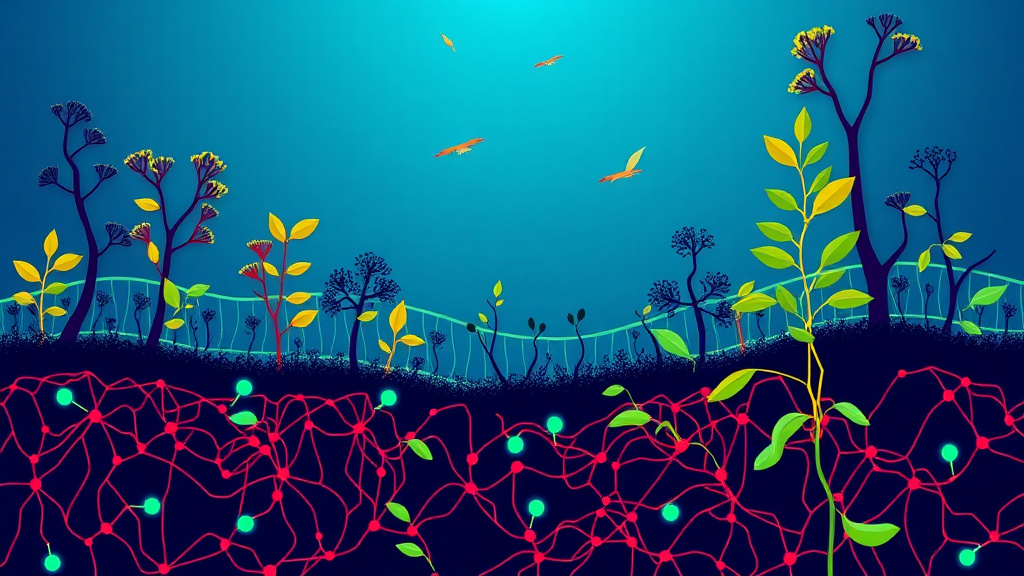
Beneath the forest floor lies a hidden world of plant communication. Scientists have for years believed that plants exchange information through subterranean pathways, but new revolutionary research finally demonstrates how. These discoveries expose the intricate processes plants use to share nutrients, alert to threats, and organize defensive responses through underground fungal systems and chemical signals. This article investigates the latest research that challenge our knowledge about botanical awareness and reframe how we perceive the Earth’s most silent yet complex communication systems.
The Fungal Network System: Nature’s Internet
Beneath the soil surface, an intricate fungal network linking plant roots in ways scientists are gradually learning more about. These underground networks, composed of threadlike fungal filaments known as hyphae, establish underground links connecting separate plants into a integrated whole. Researchers now acknowledge this network functions similarly to the internet, facilitating the transfer of resources, information, and biochemical communications over long distances. This living network significantly alters our perception of plants as independent beings, revealing instead an interconnected community involved in ongoing exchange and collaboration.
The fungal partners in these networks obtain carbohydrates from plant photosynthesis while providing plants with improved nutrient uptake and water access. Contemporary research reveal that plants leverage these fungal highways to transport nitrogen, phosphorus, and carbon compounds to surrounding vegetation, particularly those experiencing stress or nutrient deficiency. This symbiotic partnership represents one of nature’s most elegant solutions for nutrient allocation, allowing forests to function as integrated superorganisms rather than individual organisms competing for survival.
Molecular Communication and Nutrient Transfer
Plants orchestrate their underground communication through an intricate system of molecular messages conveyed through fungal networks. These molecular messengers allow plants to exchange critical data about nutrient levels, pathogenic dangers, and environmental stresses with neighboring plants. Recent investigations demonstrates that plants deliberately manage these signal transfers, calibrating message intensity based on the receiver’s needs and their own resource availability, revealing a level of botanical intelligence previously underestimated by scientists.
How Plants Share Resources
The mycorrhizal networks linking plant roots serve as biological highways for nutrient distribution. Fungi form mutual partnerships with plants, expanding their root systems and facilitating the movement of nitrogen, phosphorus, and other essential minerals. In exchange, plants supply fungi with sugars produced through photosynthesis. This reciprocal arrangement enables plants to access resources from remote areas, effectively establishing a shared nutrient pool across forest systems and exhibiting notable collaborative interactions.
Plants demonstrate striking selectivity in their nutrient-sharing partnerships, prioritizing younger or stressed plants while potentially limiting resources to competing organisms. Through biochemical communication, plants convey their feeding state to symbiotic fungi and surrounding vegetation, creating fluid nutrient distribution systems. Studies show that mature plants can even transport carbon stores to offspring of the same species, suggesting plants identify relatives and favor kin survival—a discovery that fundamentally challenges conventional understanding of plant interactions and competitive dynamics.
- Fungal networks transfer essential minerals below ground
- Plants exchange carbohydrates for mineral nutrients with fungi
- Molecular messengers control nutrient movement and resource allocation patterns
- Mycorrhizal associations enhance root system reach and efficiency
- Plants selectively support stressed and related plant neighbors
Impact on Agriculture and Ecosystems
Understanding how plants communicate through fungal networks below ground opens groundbreaking potential for sustainable agriculture. By harnessing these natural mechanisms, farmers can improve crop production while reducing chemical fertilizer dependency. This knowledge facilitates data-driven cultivation methods that operate through nature’s existing networks, potentially transforming how we grow crops and preserve soil quality for generations to come.
The biological implications go well past farming practices. Understanding plants’ linked signaling networks substantially transforms our preservation strategies and environmental stewardship practices. Protecting these belowground connections becomes vital for maintaining biodiversity, strengthening forest adaptability, and combating climate change. This research underscores that thriving ecological systems depend on preserving the unseen links linking plant populations.
