
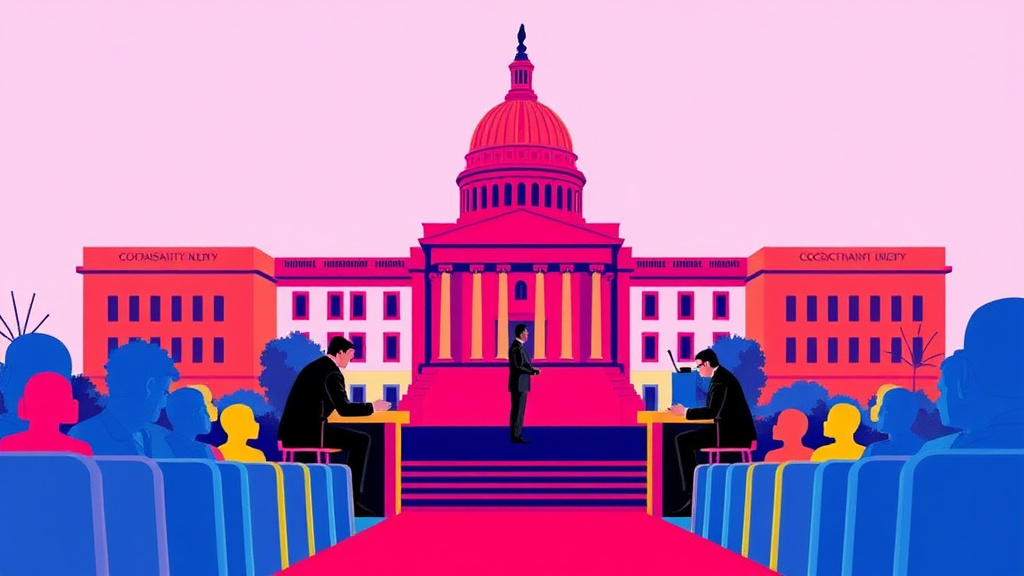
In a landmark effort to tackle mounting concerns over corruption in politics, a Senate committee has begun a comprehensive investigation into lobbying activities by corporations and alleged campaign finance violations. The review promises to shed light on how wealthy corporations affect policy choices through intensive lobbying efforts and questionable campaign donations. As legislators push for clarity and oversight, this investigation might fundamentally alter campaign finance rules and substantially transform the relationship between corporate interests and government decision-making.
Overview of the Investigation
The Senate committee’s inquiry marks a considerable step toward addressing institutional challenges within the legislative environment. This detailed examination focuses on examining the elaborate system of special interest operations and their impact on lawmaking procedures. By analyzing fiscal data, communication logs, and electoral funding, investigators aim to uncover possible breaches of electoral finance statutes. The scale of the inquiry is without precedent in magnitude, encompassing various organizations and spanning multiple electoral periods to detect evidence of wrongdoing.
This inquiry was initiated following multiple accusations and public concerns regarding the excessive influence of business funds in political campaigns. Whistleblowers and public interest groups have expressed concerns about unreported funds, front organizations designed to channel campaign funds, and pay-to-play schemes between special interest representatives and elected officials. The Senate panel recognizes the pressing nature of these matters and has allocated substantial resources to guarantee comprehensive review. The results are expected to provide critical insights into how political contribution laws are being circumvented and what statutory amendments are needed.
Key Findings and Supporting Data
The Senate panel’s investigation has revealed significant proof of systematic breaches in political donation disclosure and lobbyist reporting requirements. Initial results show that many corporations neglected to properly document their lobbying expenditures and campaign donations, with some organizations deliberately obscuring their financial trails through intricate organizational arrangements. These discoveries suggest widespread non-compliance with current rules, prompting panel officials to propose tougher enforcement measures and enhanced transparency requirements for all upcoming campaign donations and lobbying activities.
Unreported Contributions and Shell Companies
Investigators discovered a complex web of shell companies and go-between groups created to direct undisclosed donations into election campaigns. These entities were intentionally set up to skirt current campaign finance regulations, permitting businesses to surpass donation caps while maintaining plausible deniability. The panel found evidence of collaborative activities across different industries, suggesting a deliberate strategy to exploit regulatory loopholes and obscure the true sources of campaign money going to federal elections nationwide.
The utilization of shell companies exemplifies one of the most problematic aspects of the investigation, as it demonstrates how corporate entities can adeptly obscure their political influence from public scrutiny. Financial records expose intricate networks of donations moving across multiple layers of corporate structures before finally reaching campaign committees. This concealment strategy has allowed wealthy corporations to exercise substantial control over electoral outcomes while sidestepping the transparency requirements meant to preserve democratic processes.
- Shell companies established across multiple states at the same time
- Funds channeled through foreign holding corporations illegally
- Misleading operational statements submitted to regulatory authorities
- Strategic synchronization of donations to prevent discovery
- Fake employee donation schemes to surpass caps
Regulatory Implications and Future Actions
The Senate committee’s inquiry is expected to have far-reaching consequences for electoral funding standards throughout the country. If the committee uncovers evidence of pervasive infractions, lawmakers may implement comprehensive legislative reforms to strengthen transparency standards, introduce stricter donation caps, and improve enforcement mechanisms. These regulatory changes could fundamentally reshape how corporations engage in the political process and establish clearer distinctions between legitimate lobbying and improper influence trading. The investigation’s findings will probably function as a impetus for wider conversations about political funding reform.
Moving forward, the committee has established several important next steps to further its investigation. These include sending subpoenas to leading business leaders and advocacy organizations, reviewing monetary documentation and exchanges, and conducting public hearings to examine eyewitness accounts. The committee is also collaborating with government bodies, including the Federal Election Commission and the DOJ, to ensure comprehensive oversight. Initial results are anticipated in the months ahead, with a final report projected by the end of the year, which will shape upcoming policy decisions.
